New Skin, Same Atrocities: Junta Cannot Hide Its Crimes
28 March 2026
This is a critical moment for the international community to take a stronger, principled stance and demonstrate its commitment to human rights and democracy. It must neither engage with military-constructed or military-controlled structures and institutions nor overlook ongoing atrocities.
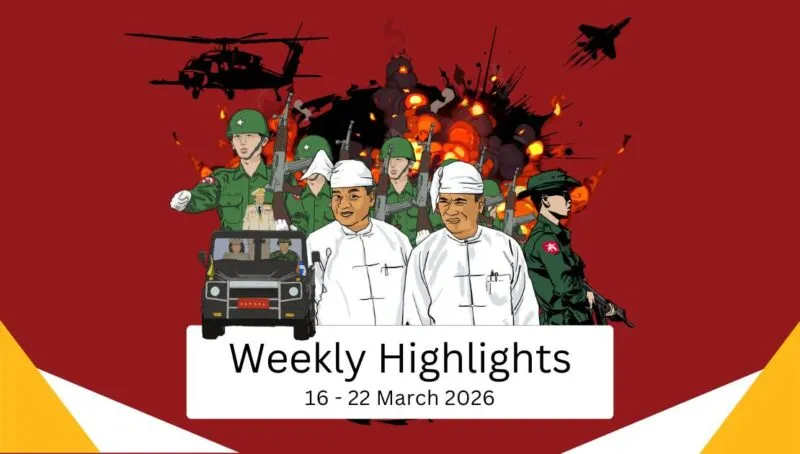
On 16 March 2026, the Myanmar military junta convened a sham parliament in Naypyidaw, with hall filled by military uniformed officers and ex-military generals dressed in civilian attire. This carefully staged display of “elected government” is built on pre-determined results from a coercive and fraudulent electoral process. The international community must not be deceived—or lapse into willful ignorance of the military’s true nature.
Despite overwhelming public rejection and international condemnation, the military is pressing ahead with its plan to manufacture legitimacy while continuing to perpetrate violence against civilians and commit massacres. On 20 March 2026, the junta carried out an aerial bombardment on a monastery sheltering internally displaced persons in Katha Town, Sagaing Region, killing dozens, including monks. While the exact death toll remains unclear, some reported that at least 50 people were killed at the site.
This reflects a calculated strategy to consolidate its ongoing, illegitimate attempt to seize control of the Myanmar state following the failed coup attempt in 2021. The outcome was foreseeable in a one-horse race orchestrated by the junta through dismantling of opposition parties that could pose a threat to its planned sham electoral outcome and the systematic manipulation of the electoral environment. This process was further shaped by coercion and fear. According to the junta-controlled Union Election Commission, the military-backed and military-controlled Union Solidarity and Development Party (USDP) secured 339 parliamentary seats—231 in the lower house and 108 in the upper house. In addition, under the military-drafted 2008 Constitution, 25 percent of seats in the national legislature are reserved for the military.
Beneath the surface of this parliamentary façade are the same perpetrators responsible for sustained campaigns of terror against civilians, now recast in civilian roles. The appointments themselves are revealing. Khin Yi, Chairperson of the USDP, has assumed the position of Speaker of the Pyithu Hluttaw (Lower House)—a henchman of previous military juntas—serving under Than Shwe, Thein Sein, and Min Aung Hlaing. He oversaw the brutal crackdown on the 2007 Saffron Revolution and went on to orchestrate pro-military rallies before and after the 2021 coup attempt.
Similarly, Aung Lin Dwe, a USDP member, former general, and loyalist of junta chief Min Aung Hlaing, has become the Speaker of the Amyotha Hluttaw (Upper House). Control is not limited to the national legislature. The military is also extending its authority into township-level administration by deploying personnel in civilian attire. Reports indicate that the Ministry of Defense is compiling lists of deputy battalion commanders for administrative assignments—further entrenching military control at every level of civilian life.
What is being projected by the junta is a return to “normalcy”, while past and ongoing crimes are systematically obscured—echoing strategies employed during the 2010 political transition. The international community must not repeat this mistake. As Yanghee Lee, Member of the Special Advisory Council for Myanmar (SAC-M), has warned, “A confected title and a costume change won’t fool the Myanmar people or the international community or erase his crimes. He will ultimately be brought to heel and to justice.”
There is no genuine audience left to endorse the junta’s performance of “governance”. The junta is left with nothing. It has lost more than 60 percent of its territory, by some estimates, to resistance forces, and its sham election is supported only by a handful of dictators such as China and Russia. What remains is a façade: symbolic institutions, staged appearances, while it continues with its deliberate attempts to secure international recognition. The people of Myanmar have made their answer clear: they will not—and will never—accept rule and control by the military. With this clarity of purpose, the people are building a functioning, bottom-up federal democratic system rooted in equality, justice, inclusion, and respect for human rights.
The international community must support these nation-building efforts by the true representatives of the people of Myanmar with practical support to the National Unity Government (NUG), the National Unity Consultative Council (NUCC), ethnic resistance organizations (EROs), ethnic federal councils and units, and civil society organizations.
In parallel, international actors must avoid any action that risks legitimizing the military junta and its controlled institutions. ASEAN, in particular, must refrain from inviting junta representatives—including so-called “non-political” representatives—to any meetings, including upcoming ministerial meetings and summits. More broadly, states and institutions must ensure that no form of engagement confers recognition or false legitimacy on structures emerging from the fraudulent electoral process.
At the same time, coordinated and sustained pressure is essential. Governments should expand and rigorously enforce targeted sanctions on military-linked businesses, financial networks, and foreign direct investments, alongside comprehensive embargoes on aviation fuel, arms, and dual-use goods. These measures are critical to constraining the military’s capacity to continue its campaign of violence.
This is a critical moment for the international community to take a stronger, principled stance and demonstrate its commitment to human rights and democracy in Myanmar. It must neither engage with military-constructed or military-controlled structures and institutions nor overlook ongoing atrocities. Instead, it must stand with the people of Myanmar and support their efforts to build an inclusive and democratic future from the ground up.
_______________________
[1] One year following the 1988 pro-democracy uprising, the former military junta changed the country’s name from Burma to Myanmar overnight. Progressive Voice uses the term ‘Myanmar’ in acknowledgement that most people of the country use this term. However, the deception of inclusiveness and the historical process of coercion by the former State Peace and Development Council military regime into usage of ‘Myanmar’ rather than ‘Burma’ without the consent of the people is recognized and not forgotten. Thus, under certain circumstances, ‘Burma’ is used.
Progressive Voice is a participatory, rights-based policy research and advocacy organization that was born out of Burma Partnership. Burma Partnership officially ended its work on October 10, 2016 transitioning to a rights-based policy research and advocacy organization called Progressive Voice. For further information, please see our press release “Burma Partnership Celebrates Continuing Regional Solidarity for Burma and Embraces the Work Ahead for Progressive Voice.”
Resources
Statements & Press Releases
သတင်း ကြေညာချက် အမှတ် (၄/၂၀၂၆)
By Independent Press Council Myanmar
By Network for Human Rights Documentation – Burma
By Network for Human Rights Documentation – Burma
From Fatigues to Longyis: The Myanmar Junta’s Absurd Rebrand Begins
By Special Advisory Council for Myanmar
စစ်ယူနီဖောင်းမှ အရပ်ဝတ်ပြောင်း၍ မြန်မာစစ်အုပ်စု၏ ရူးနှမ်းနှမ်း ပုံပြောင်းလုပ်ငန်းစဉ် စတင်ပြီ
By Special Advisory Council for Myanmar
လက်ရှိ ဖြစ်ပွားနေသည့် ပဋိပက္ခများနှင့် ပတ်သက်ပြီး တအာင်းအရပ်ဘက်အဖွဲ့အစည်းများကွန်ရက်၏ ထုတ်ပြန်ချက်
By Ta’ang Civil Society Network
Reports
How the military blocked independent media during the 2025-6 elections
By Human Rights Myanmar and Independent Press Council Myanmar
၂၀၂၅-၂၆ ခုနှစ် ရွေးကောက်ပွဲကာလအတွင်း လွတ်လပ်သော သတင်းမီဒီယာများအပေါ် စစ်တပ်၏ ပိတ်ဆို့ကန့်သတ်ပုံ
By Human Rights Myanmar and Independent Press Council Myanmar
Defying a Dictatorship: An Overview of the Human Rights Situation in Burma
By Network for Human Rights Documentation – Burma
At A Glance On Armed Struggles (13Mar – 19 Mar 2026)
By Nyan Lynn Thit Analytica
New coal-fired power plant in Mong Hsat set to worsen Kok River contamination
By Shan Human Rights Foundation
Read Next
10 July 2026