Will the Philippines break ASEAN’s complicity with the Myanmar military junta?
10 November 2025
Guest contributor
Khin Ohmar
This is a moment of choice in a region that has mastered the art of waiting.
For nearly five years, the illegal military junta has waged a relentless campaign of violence against the people of Myanmar—bombing villages, torturing detainees, silencing journalists, executing students, and displacing millions.
Even as the death toll continues to rise and the destruction deepens, the Association of Southeast Asian Nations (ASEAN) has clung to the illusion that its failed Five-Point Consensus is a peace plan. It is not. It has become a shield for impunity.
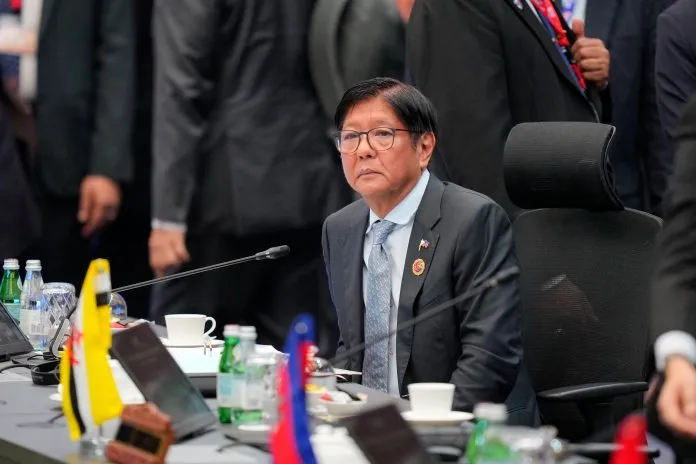
But a new opportunity has emerged. In just two months, the Philippines will assume the ASEAN chair. This is not a ceremonial transition, but a moment of political choice.
Will the Philippines follow ASEAN’s long pattern of delay, appeasement, and silence in the face of atrocity? Or will it stand—at last—with the people of Myanmar and help lead the region away from complicity and toward accountability?
What ASEAN has and has not done
Since the military’s attempted coup in 2021, ASEAN has issued statements and adopted and reinstated annually the so-called Five-Point Consensus.
For the people of Myanmar, these gestures have translated into exactly nothing. Not a single life saved. Not a single airstrike stopped.
ASEAN claims to be working “quietly” behind the scenes—but with nothing to show for it. The junta in Naypyidaw remains emboldened, shielded from regional consequences.
Even as the junta’s war crimes mount in full view of the international community, ASEAN continues to seat junta representatives at regional forums. It continues to exclude Myanmar’s elected leaders, ethnic resistance forces, and civil society from any meaningful role in shaping the future of Myanmar’s people. It continues to place the appearance of unity above the reality of violence and mass murder by this criminal military junta.
And as Naypyidaw prepares to stage its fraudulent “elections” in late 2025—designed not to restore democracy but to rebrand military dictatorship—ASEAN still offers no real opposition, no plan, and no protection for the people of Myanmar.
An opportunity emerges
In January 2026, the ASEAN chair will bypass Myanmar and go to the Philippines. This is an opportunity to set the region’s agenda right, shape diplomatic tone, and signal what kind of leadership ASEAN chooses to project—not only to the people of Myanmar and the region but to the world.
Unlike other ASEAN states that have normalized engagement with the junta, the Philippines retains both political space and moral standing to take a stronger line. It has done so before.
In 2017, the Philippines refused to let Myanmar block language referencing the Rohingya crisis in ASEAN statements. That kind of moral clarity is urgently needed again.
The junta is escalating attacks ahead of its sham elections, which have already been denounced by Myanmar civil society, the National Unity Government (NUG), ethnic resistance organizations, and the Community of Democracies (CoD).
While ASEAN remains silent, the Philippines has shown signs of movement. In October, lawmakers from across party lines publicly urged the incoming chair to take a bolder stance on Myanmar.
Their joint statement called for support to Myanmar’s pro-democracy forces, cross-border humanitarian aid, and recognition of the NUGt. They denounced ASEAN’s current inaction and demanded a new approach.
What leadership looks like
Leadership in this moment will not be measured by handshakes, communiqués, or quiet diplomacy. It will be measured by the willingness to confront atrocity with clarity—and to stand with those who are risking everything to resist it and build a peaceful future free from military tyranny.
As incoming ASEAN chair, the Philippines has a rare chance to lead with principle. Here are three concrete steps it can take:
1. Reject the junta’s electoral theater. The so-called elections planned by the military junta in late 2025 are nowhere near a democratic process. They are a strategy to reinstate military dictatorship, deepen repression, and regain legitimacy or recognition from the international community.
The Philippines should state clearly that elections held under illegal and illegitimate military junta, amid bombing and mass displacement of millions of civilians, and with democratic political parties dissolved cannot be called an election let alone free, fair or credible.
2. Recognize Myanmar’s legitimate democratic forces. Any ASEAN response that excludes the NUG, ethnic resistance organizations, and grassroots civil society groups is not a response—it is surrender to the military junta.
These actors represent the real democratic will of Myanmar’s people. Their exclusion from ASEAN processes must end. The Philippines can lead by recognizing their legitimacy and creating space for them in regional dialogue.
3. Support border channeled humanitarian aid—without junta control. ASEAN has taken a step up under the chairmanship of Malaysia as it stated at the 47th Summit the decision to “advance the safe, effective, and transparent delivery of humanitarian assistance without discrimination with the continued support of relevant stakeholders in Myanmar and through cross-border efforts where necessary and to ensure that assistance, without discrimination, can directly reach Internally Displaced Persons (IDPs) affected by the ongoing armed conflicts.”
This decision is a significant step in the right direction as its ongoing attempt of humanitarian aid delivery through junta channels only enables Naypyidaw to weaponize and block the aid reaching to vulnerable populations that are fleeing junta’s attacks.
As ASEAN chair, the Philippines should ensure that the ASEAN Coordinating Center for Humanitarian Assistance on disaster management (AHA Center) channels the humanitarian aid delivered directly to the people: through civil society networks, ethnic health providers, local humanitarian responders channeling through the border.
These are the groups saving lives on the ground—and they must be empowered and partnered with, not bypassed.
Break the pattern, or become part of it
I have watched ASEAN repeat the same pattern for decades: delay, deny, and disengage—all in the name of “non-interference,” even as people are slaughtered by a brutal and illegitimate military junta.
Behind the language of consensus, the region has allowed dictatorship to flourish. It doesn’t have to be this way.
The Philippines has an opportunity not only to chair ASEAN, but to redefine it. This is not a call for heroism—it is a call for the kind of leadership that remembers ASEAN was founded to protect people. That peace built on silence is not peace at all.
The people of Myanmar are already doing their part. Against all odds, they are building a future grounded in protection of human rights, federal democracy, inclusivity, and accountability.
The Philippines must take a higher bar in its approach to resolve the Myanmar crisis than Malaysia did during its chairmanship in 2025. We do not ask the Philippines to fight our battle—but we do ask you to act according to ASEAN’s own promises and pledges to the people of Myanmar and of the region.
People of Myanmar and the region are watching. The world is watching. And history will remember who stood with the people of Myanmar—and who stood aside.
Khin Ohmar is a Myanmar human rights activist who was involved in organizing the ‘8888’ nationwide pro-democracy uprising. She is also the founder and chairperson of Progressive Voice, a Myanmar human rights organization. She developed the Women Peacebuilding Program for Women’s League of Burma and served as program coordinator from 2000 to 2006.
Announcements
Read Next
08 July 2026
အရေးနိမ့်နေသော စစ်အုပ်စုကို “ငြိမ်းချမ်းရေး” မျက်နှာဖုံးတပ်ကာ ပြစ်ဒဏ်ကင်းလွတ်ခွင့် မပေးပါနှင့်
07 July 2026