News audience suppression under Myanmar’s digital coup
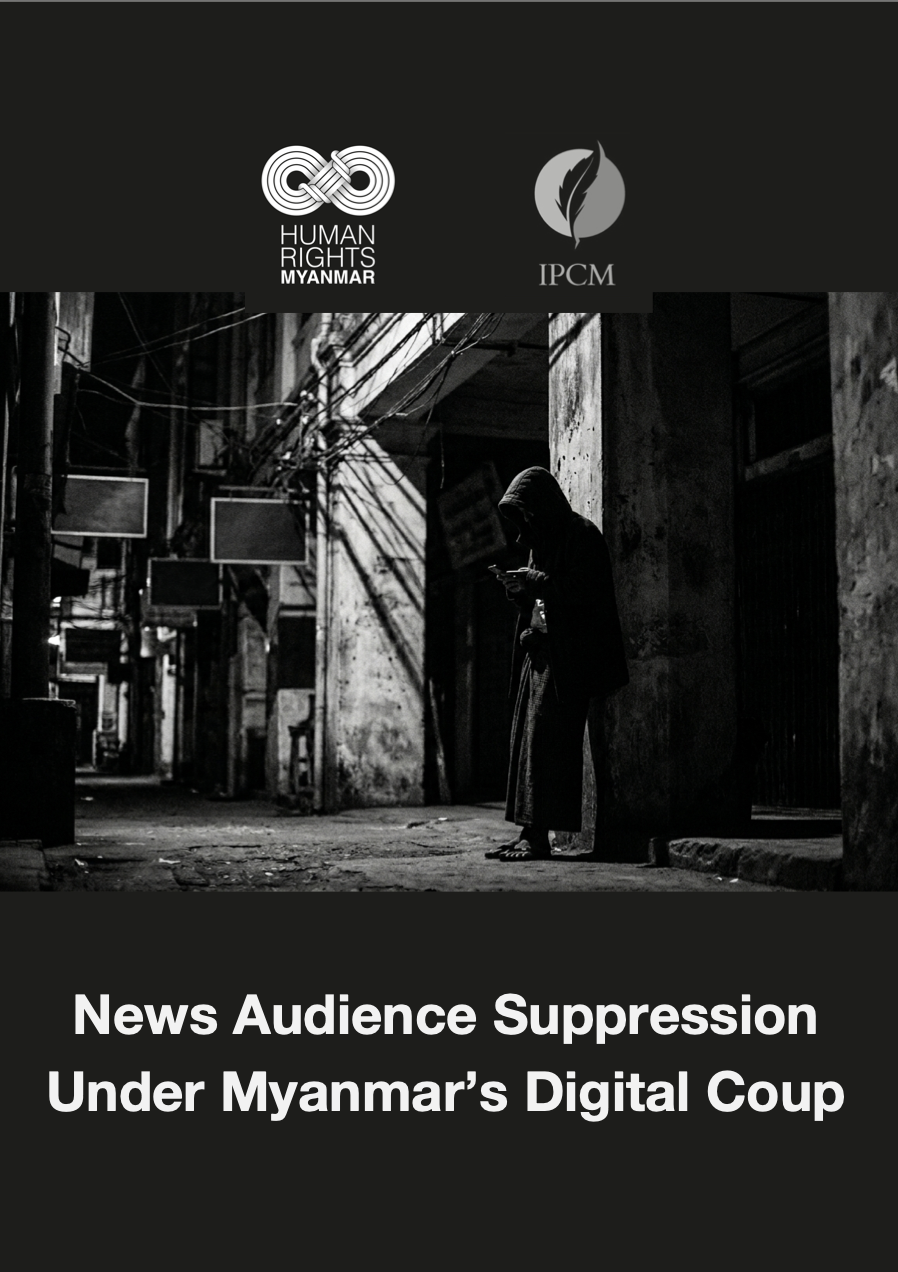
Since the 2021 coup, the military has systematically made access to media a high-risk activity for the public. This report, one of a series on media freedom up to and during the 2025-26 sham elections, analyses 12 billion Facebook data points and reveals the impact of military shutdowns, blocks, and surveillance, more expensive data, and platform algorithms on media audiences.
- Media outlets increased their total Facebook output by +18% despite the criminalisation of journalism, with regional media production growing by +108% since the coup.
- Military-enforced internet shutdowns, blocks, and rising data costs, combined with platform algorithm changes, have cut public access to media by -48% in a systematic act of censorship.
- The public has avoided military propaganda, with views of military-affiliated media falling by -76% in favour of more independent reporting.
- Extensive digital surveillance has caused shares and comments on media posts to drop by -63% and -42%, in a sign of mass public self-censorship.
- The digital public square is becoming polarised, as views of more impartial media fell by -70%, and people increasingly sought partisan echo chambers.
While the military has failed to control the media, it has succeeded in turning a universal human right into a high-risk and costly activity. Reclaiming this digital space is no longer just a matter of media survival, but a necessity for the survival of the public’s right to information.
Introduction
Five years of systemic human rights atrocities have preceded the military’s attempt to finalise its coup objectives by holding long-promised elections phased between December 2025 and January 2026. The polls were widely condemned by the international community as a sham and failed to gain recognition from regional bodies, including ASEAN.
A previous report in this series documented how the military captured Myanmar’s digital infrastructure in advance of the elections, blocking access to the media. A second report showed how the media have faced systematic rights violations on social media platforms during the voting period.
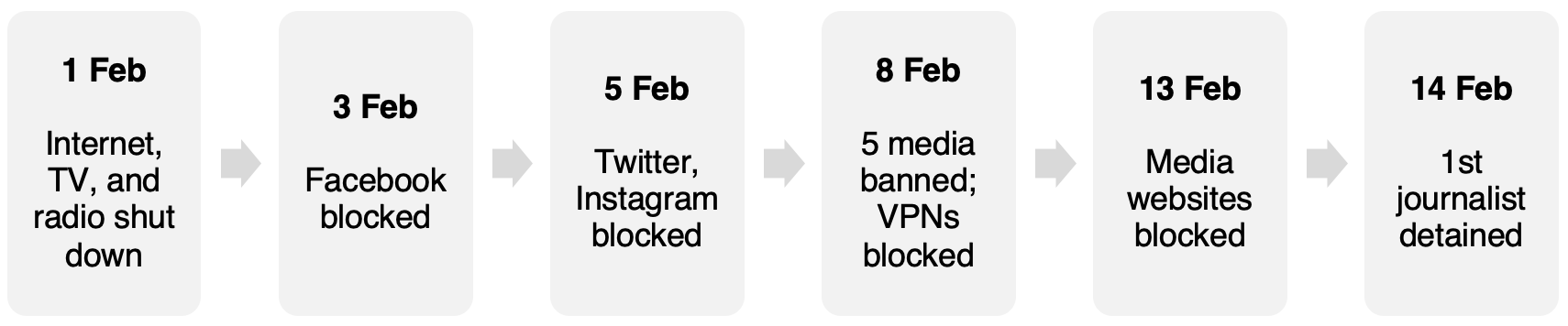
This report tracks the media on Facebook, comparing the pre-coup period in 2021 to the period during the contested elections from October 2025 to January 2026. It analyses the impact of the coup alongside the media’s parallel resilience. The first sections of the report are focused on understanding the scale and depth of the impact. The later sections look more closely at the different types of impact.
The findings are grounded in the standards in Article 19 of the International Covenant on Civil and Political Rights (ICCPR), and international programmes like the UN Plan of Action on the Safety of Journalists and the Issue of Impunity. They evaluate the extent to which the people of Myanmar can exercise their right to seek, receive, and impart information on Facebook. Through this lens, the report assesses the actions of both the military and global tech companies in following international human rights standards.