Respect Myanmar: Research on Electoral Security, Participation, Engagement, and Civic Trust of Myanmar Migrants
18 December 2025
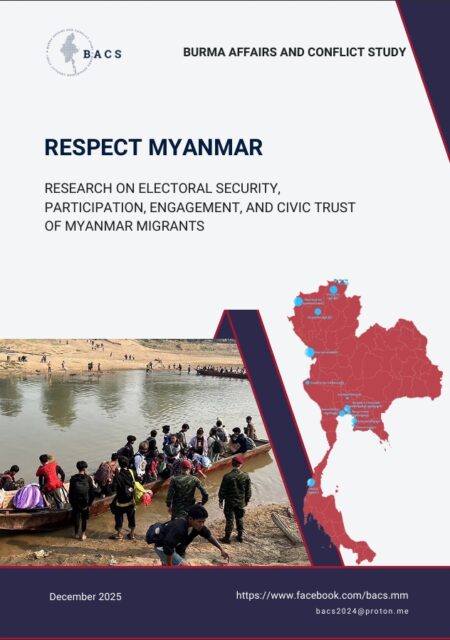
In the “Respect Myanmar” research, a total of 209 Myanmar migrants residing across 14 cities (11 provinces) of Thailand participated—111 through in-depth interviews and 98 through 12 focus group discussions. Participants represented diverse groups in terms of gender identity and sexual orientation. The number of male and female respondents was nearly balanced, while individuals with other gender identities were included in smaller proportions.
Among all participants, the age group between 18 and 35 formed the largest segment, accounting for more than half of respondents in both data collection formats. The study population also comprised individuals from a wide range of occupations and ethnic backgrounds, as well as people who had migrated from different regions of Myanmar. For analytical purposes, the migration periods were categorised into three phases: before the military coup, after the coup but prior to the announcement of the conscription law in 2024, and post-2024 following the announcement of the conscription law. Clear shifts were observed across these migration cohorts, and the findings indicate notable links between reasons for migration and age groups. (Further details can be found in the background information section.)
Almost all participants in the study valued and respected democratic elections, viewing them as an essential national process in which all citizens should have the right to participate. Respondents also expressed a strong desire to actively engage in elections, driven by their expectations for the emergence of a civilian government, improvements in national systems, and enhanced public services through a democratic electoral process.
When comparing public attitudes toward politics and elections—and specifically their views on the upcoming 2025 election—with their past electoral engagement, particularly the 2020 general election, notable patterns emerged. Those who had participated in the 2020 election were found to have been involved not only through voting but also through election-related educational activities, poll-watching, and volunteering in election observation efforts. Their discussions reflected their hopes and aspirations for the 2020 election and their broader future expectations. Respondents who had taken part in the 2020 general election commonly described it as a fair and free election, one that genuinely represented the will of the people, evidenced by the high level of public participation.
In addition, participants highlighted that, under the former civilian government, they had experienced improved transportation infrastructure, economic stability, better employment opportunities, freedom of expression and safety, as well as freedom of movement. They also expressed that during the 2020 election period; they were able to hold aspirations and hopes for the future. Many noted, however, that all of these aspects had been lost as a direct consequence of the military coup. (These reflections are further elaborated in the sections comparing public perceptions of democratic elections and participation in the 2020 general election.)
Although Myanmar migrants place high value on democratic elections and hold strong expectations for them, they do not believe that the military council’s planned 2025 election will be free or fair, nor do they expect it to address the country’s current challenges or hardships. They therefore do not consider it an election in which they should participate. In other words, they clearly perceive this election as a staged, illegitimate process that is neither relevant to them nor appropriate for their participation. Most respondents reported that they only had a basic awareness that an election would be held, while very few possessed detailed information that voters should typically know. Those who were actively seeking information were not doing so out of an intention to vote; rather, they were monitoring the process with skepticism to understand how the military council was shaping the election. These individuals were predominantly from civil society backgrounds and the media sector.
The majority of respondents believed that the military council does not have legitimate authority to conduct an election. Some expressed the view that the military council’s legitimacy does not depend on public recognition, as they are armed groups who simply act according to their wish. This indicates that the public does not recognise the authority of the military council and views its current governance as an imposed and coercive rule.
Because participants do not believe that the military council intends to hold an election that would lead to the emergence of a genuine civilian government, a very high proportion —up to 98 percent—stated that they do not wish to participate or vote. Only around 2 percent said they would consider voting, and these individuals indicated that their motivation stemmed from a desire for peace. However, they also believe that the planned election will neither address Myanmar’s current hardships and crises nor be free and fair —views that are consistent with those who do not wish to vote.
According to the findings, Myanmar migrant communities consistently expressed that they desire and expect meaningful elections only when conflicts have ceased or when the country is stable and peaceful. They emphasised that such elections must be inclusive and must have the potential to help address the severe challenges and crises currently facing the country. Given the significance of representation in Myanmar’s current context, the study included a dedicated section to explore the perspectives of Myanmar migrants regarding political representation. Only about 1 percent of respondents viewed the military council—currently attempting to organise the 2025 election—as a legitimate representative body, and those who did so explained that their view was based solely on the military council’s current control over governing authority.
All remaining participants rejected the military council as a legitimate government, instead describing it as “an armed force that has unlawfully seized power and is oppressing and killing the people” With respect to other revolutionary actors, the majority of respondents referred to the National Unity Government (NUG) as the most representative entity. However, they simultaneously expressed concerns about the NUG’s effectiveness and highlighted the need for improvements and reforms.
The second-largest group stated that, although they acknowledged local or regional representation by various revolutionary forces, they did not believe that any single individual or organisation currently possesses the capacity to represent the entire country. Respondents from ethnic nationality regions tended to trust the ethnic revolutionary organisations associated with their respective ethnic groups. Among migrant workers, a notable minority expressed a desire to grant representative authority to labour rights organisations and individuals who have been actively protecting their rights and providing assistance during difficult circumstances. (These findings are further detailed in the section on public views regarding representation.) Regarding the conditions of living as migrants in Thailand, a dedicated section of the study examined the concerns and challenges they currently face. The majority of respondents highlighted their most pressing worries as the increasingly restrictive environment surrounding legal residency, the difficulties in obtaining official documentation, and the fact that many become undocumented simply because they cannot afford to renew their documents. Additionally, they expressed concerns about limited job opportunities, violations of labour rights, exploitation, and cases of wage theft. Many also feared the Thai authorities’ arrests and forced deportations of undocumented Myanmar migrants back to Myanmar, which they perceived as life-threatening.
Other concerns included the shortage of food in refugee camps, the harsh living conditions, and the loss of access to education, healthcare, and future opportunities for young people. Although almost all Myanmar migrants expressed their intention not to vote in the 2025 election, they nonetheless worried that their decision to abstain might lead to even tighter restrictions and more severe consequences related to the hardships described above.These findings highlight the limited ability of Myanmar migrants to freely participate in the 2025 election, and show that rather than anticipating positive or meaningful changes from the election, they primarily feel heightened stress and fear. Notably, not a single respondent viewed the 2025 election as something beneficial for the country or as a meaningful step toward important change.
Continuing with questions on perspectives and sentiments toward the international community, the findings show that Myanmar migrants feel deeply disappointed with the United Nations and other international organisations, perceiving them as having neglected Myanmar’s crisis. Similarly, respondents view ASEAN member states as approaching the Myanmar issue primarily through the lens of their own economic and strategic interests, rather than standing with the Myanmar people who continue to suffer from hardship and violence. They strongly believe that ASEAN lacks the willingness to genuinely support the Myanmar people.
Regarding Thailand, as a neighboring country, respondents expressed sincere gratitude for the acceptance and opportunities provided to them. They further hoped for increased humanitarian assistance, emphasising that they wished to be regarded not merely as “Myanmar nationals” but rather as vulnerable individuals in need of protection. They would like the Thai government to consider supporting them as displaced persons. Moreover, respondents expressed a desire for Thailand to consider issuing a form of residency or work permit that is not tied to the military junta—one that would allow them to live and work lawfully during this transitional period in which they cannot bring about systemic or administrative change inside Myanmar. They suggested that such documentation could be granted based on Thailand’s own verification processes.
Particularly regarding arrests and deportations, respondents stated that deportation to Myanmar is equivalent to being sent to their deaths. They therefore strongly appealed for Thai authorities to refrain from such actions and instead handle cases strictly in accordance with Thai law.
In conclusion, Myanmar migrants expressed deep concerns and hopes regarding future developments. Their foremost worry is that the international community—including Thailand—may mistakenly regard the military junta’s repressive, unfree, and unfair election as legitimate and formally recognise it. Respondents fear that if the junta gains any form of legitimacy, domestic repression will intensify and pressure on migrants abroad will increase, including higher taxation, forced contributions, and threats against family members in Myanmar such as arrests and the confiscation of property.
Looking ahead, respondents strongly believe that meaningful change and improvement in education, healthcare, economic conditions, and the overall political and military situation will require a collective leadership capable of driving genuine transformation. All participants perceived Myanmar as being in a state of severe deterioration across multiple sectors and emphasised the urgent need for greater cooperation among domestic actors, as well as more proactive international engagement to support conflict resolution.
Amid their own difficult circumstances, respondents were also found to express words of encouragement to fellow migrants and especially to those inside Myanmar, who continue to live under even more extreme constraints and dangers. These expressions of solidarity highlight the resilience and determination of the Myanmar people, which respondents recognised and deeply valued.
Announcements
19 May 2026