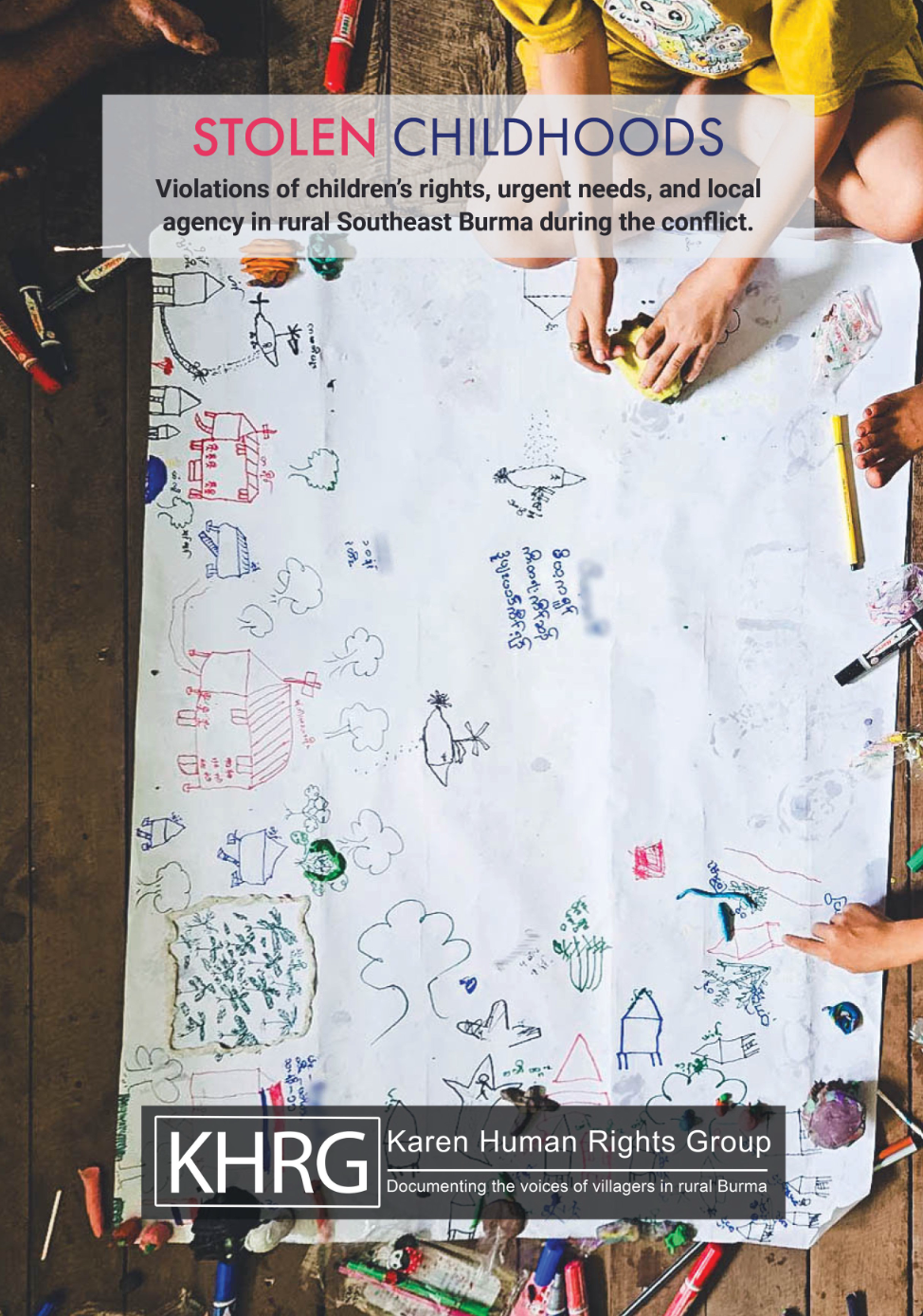
Stolen Childhoods: Violations of children’s rights, urgent needs, and local agency in rural Southeast Burma during the conflict
29 October 2025
Executive Summary
Since the 2021 military coup, the State Administration Council (SAC) has intensified militarisation and violence in Southeast Burma. Children in locally-defined Karen State are particularly vulnerable, facing both the immediate threat of violent abuses and the longer-term harm caused by the destruction of services essential to their development and wellbeing.
Building on villagers’ voices, this report provides an account of the multifaceted impacts of armed violence on children during 2024 and 2025. It examines the barriers children face in accessing education, detailing how SAC attacks on schools have caused casualties, destruction, and disruptions to schooling. Children have also been forced to continue their education in displacement, without adequate shelter and materials, and under constant fear of hostilities. Conflict-related factors, such as livelihood challenges, have further contributed to school dropouts. The report also analyses how SAC-led attacks and movement restrictions have severely disrupted access to healthcare, sanitation, nutrition, and safe living environments, leading to deteriorating health outcomes. Clinics and medical personnel have been repeatedly targeted, while confiscation of aid at checkpoints has created acute shortages of medicines and equipment. High treatment costs and widespread poverty further strain children’s health.
Furthermore, it explores the impact of militarisation and ongoing violence on children’s psychosocial wellbeing. Living under the constant insecurity of attacks caused fear and distress among children, many of whom have lost family members, seen their homes destroyed, or been forced into displacement. These experiences have disrupted family and community life, depriving children of a childhood where play, learning, and hope for the future can thrive, and have led to broader social consequences such as rising drug use among youth. The report also examines how ongoing violent abuses, mostly committed by the SAC, continue to endanger children’s lives and wellbeing. KHRG documented killings, injuries, arbitrary arrests, enforced disappearances, ill-treatment, and sexual violence against children. It also covers the recruitment of children as soldiers within armed forces.
Despite these grave harms, children and their communities show remarkable resilience. They continue to sustain schools, clinics, and support networks under extreme risk, while children voice aspirations for safety, education, and peaceful futures. The report also evaluates the availability of humanitarian aid and identifies critical gaps in local support systems.
The findings of this report reveal a consistent pattern of abuse against children amounting to serious violations under the United Nations’ Six Grave Violations Framework and international human rights and humanitarian law, in many instances, rising to the level of war crimes or crimes against humanity. Immediate action is needed to stop the SAC’s actions, protect children’s lives, and restore dignity and wellbeing. Safeguarding children in Southeast Burma is not secondary to resolving the conflict: it is a necessary step toward meaningful and lasting peace.
Announcements
19 May 2026